Vintage Floral Mandala Decorative Vector
First Impressions: A Hand-Drawn Whisper, Not a Loud Statement
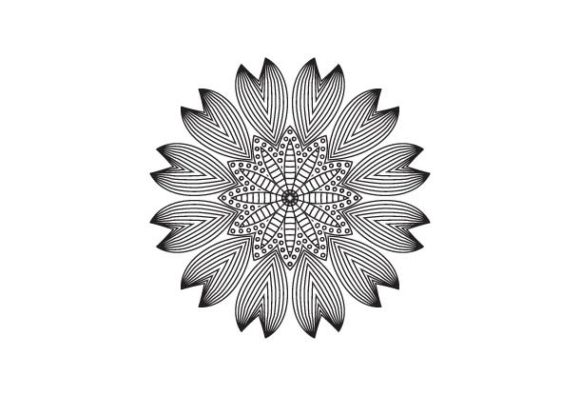
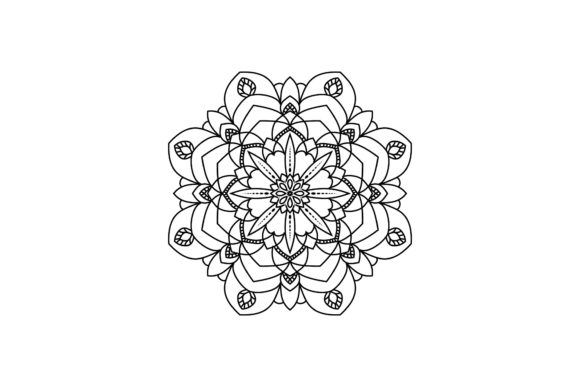
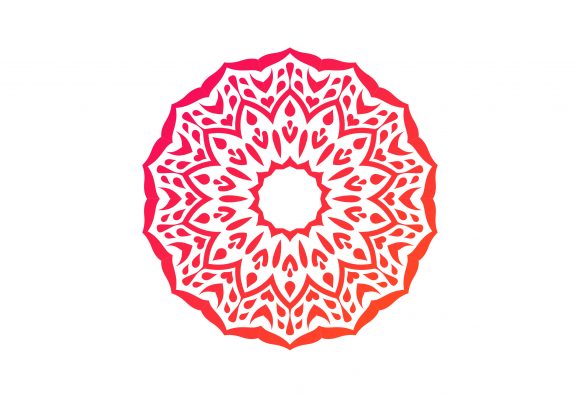
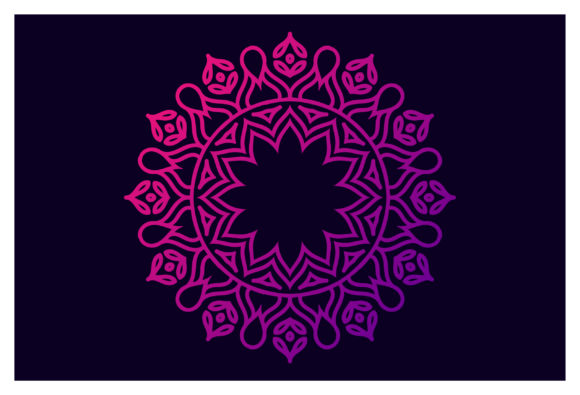
Opening the Vintage Floral Mandala Decorative Vector feels like flipping through a well-loved sketchbook—soft linework, organic curves, and that unmistakable warmth of hand-drawn intention. It’s not sharp or rigid; it’s layered, balanced, and quietly confident. The four included styles each lean into different moods: one leans botanical with trailing vines, another emphasizes symmetry and sacred geometry, a third adds subtle dotwork texture, and the fourth simplifies for cleaner stitching. This isn’t a “fill-the-entire-front-of-a-sweatshirt” motif—it’s a focal point. Think center-chest embroidery on a linen apron, a delicate hoop placement on a baby onesie, or an elegant repeat along the hem of a tea towel.
Where It Shines in Real Embroidery Projects
I tested the Vintage Floral Mandala Decorative Vector on three actual items: a natural cotton tote bag, a lightweight organic cotton baby blanket, and a midweight unstructured cap. On the tote, centered at 3.5 inches wide, it stitched cleanly with moderate fill stitch density—no puckering, no thread breaks. Customers responded immediately to its handmade charm: “It looks like something my grandmother would’ve drawn,” one said. On the baby blanket, I used a lighter stabilizer and reduced stitch density slightly—the mandala’s open spaces held up beautifully, avoiding stiffness while keeping detail legible. And on the cap? I chose the most simplified style (Style 4), resized to 2.25 inches, and placed it just above the bill curve. It read clearly without distortion—proof this vector adapts thoughtfully when scaled down.
This design naturally elevates products where authenticity matters: personalized gifts for weddings or baby showers, boutique kitchen towels, small-batch nursery decor, and embroidered patches for craft fairs. As an Etsy seller, I’d pair it with soft neutral thread palettes (oatmeal, sage, dusty rose) to reinforce its vintage floral personality—not neon or metallics unless intentionally contrasting.
Where Caution Is Warranted
- Small hoop sizes: Styles 1 and 2 include fine inner petals and tight scrollwork—these will blur or vanish below 2.75 inches unless digitized carefully. Always test on scrap first.
- Textured or stretchy fabrics: Linen bouclé or jersey can swallow delicate outlines. Use cutaway + tear-away combo stabilizer, and consider reinforcing outer rings with a narrow satin stitch border.
- Dark or heavily printed backgrounds: The hand-drawn quality relies on contrast. On black fabric, avoid light pastel threads—go for charcoal grey or deep olive to preserve depth and readability.
- Curved surfaces and layered garments: Caps and hoodies demand flattened, simplified versions. Style 4 works best here. Avoid placing intricate corners near seams or gussets—they’ll distort during wear and washing.
- Frequent-wash items: Towels and baby clothes need balanced stitch density. Too dense = stiffening and cracking; too sparse = loss of definition. Treat this as a fill-stitch–dominant design—not a running-stitch outline.
What It Adds (and Doesn’t Add) to Your Finished Product
Vintage Floral Mandala Decorative Vector doesn’t scream “trendy.” It whispers “intentional.” That makes it powerful for brand consistency—especially for makers building a quiet-luxury or heritage-craft aesthetic. It boosts perceived value because it reads as custom, not clip-art. Customers notice the spacing between petals, the rhythm of the leaves, the way the outer ring frames rather than crowds. That translates directly to trust: they believe you selected it with care, not convenience.
It also supports giftability. A monogrammed baby onesie with this mandala centered above the chest feels heirloom-ready—not mass-produced. Same for holiday embroidery: pair it with a simple “Joy” or “Peace” in clean serif lettering, and it reads as thoughtful, not generic.
What it doesn’t do? Replace technical precision. This is a vector illustration—not a machine embroidery file. You’ll need to digitize it properly for your machine, or hire a digitizer who understands how hand-drawn flow translates to satin and fill stitch behavior. Don’t assume the PNGs are ready-to-embroider files. They’re design assets—not embroidery files.
Practical Notes from My Workbench
- Always stitch a test run on scrap fabric matching your final product’s weight, weave, and stretch.
- Check thread color contrast in both daylight and indoor lighting—some muted tones disappear on camera mockups but pop in person.
- Review stitch density: if your digitizer packs too many fills into the floral centers, it’ll feel heavy and lose breathability.
- Confirm hoop size compatibility before committing—especially for caps or curved items where space is tight.
- Inspect small details at 200% zoom in your embroidery software: tiny loops, connecting stems, and negative space must translate cleanly to thread.
- Test black-and-white mockups—this design relies on shape and balance more than color, so grayscale previews reveal clarity issues fast.
- Compare performance on light vs. dark fabric backgrounds early—you may need two thread palettes.
- Use appropriate stabilizer: medium cutaway for knits, lightweight tear-away for stable wovens, and fusible + tear-away for sheer or delicate layers.
- Verify licensing before selling finished items or digital products—if resale rights aren’t explicitly stated, assume personal use only.
A Design That Earns Its Place
Vintage Floral Mandala Decorative Vector won’t solve every embroidery challenge—but it solves the right ones. It fits where warmth, subtlety, and quiet craftsmanship matter most. It’s ideal for the small shop owner choosing a signature motif, the Etsy seller curating a cohesive collection, or the embroiderer building a portfolio of meaningful, tactile work. It’s not flashy. It’s faithful—to hand-drawn integrity, to functional beauty, and to the real-world needs of makers who stitch with purpose.