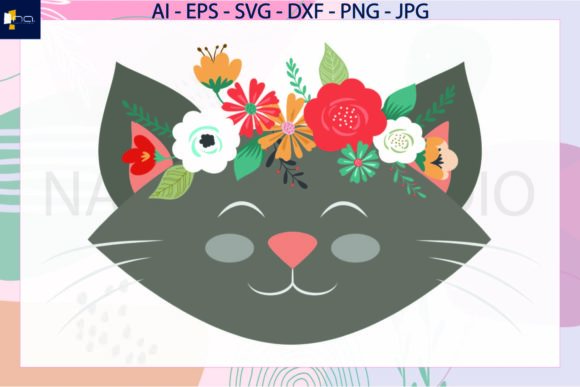
Floral Botanical Flowers Brush Design: Graphics & Illustrations
As a graphic designer who’s built brand identities for over a dozen handmade businesses—from ceramic studios to herbal apothecaries—I opened Floral Botanical Flowers Brush Design expecting delicate, hand-painted charm. What I found was something more intentional: a cohesive, expressive brushwork set that breathes warmth and organic authenticity into real client projects. This isn’t clipart. It’s a considered graphic design asset with rhythm, texture, and subtle variation—ideal for a spring launch for a local botanical tea brand I’m currently designing for.
A First Impression That Sets the Mood
The moment you place the first bloom on canvas, you feel it: soft edges, natural tapering strokes, gentle opacity shifts—like ink bleeding just slightly into watercolor paper. These aren’t rigid vector flowers; they’re illustrations rooted in tactile process. The palette leans earthy but not muted—think sage greens, dusty pinks, warm ochres—with enough contrast to hold presence without shouting. It instantly evokes slow living, artisanal care, and seasonal storytelling—perfect for an Etsy product line, a farmers’ market poster, or a wellness blog’s Pinterest pin.
Where It Shines in Real Client Work
In my current project—a packaging refresh for a small-batch lavender honey company—Floral Botanical Flowers Brush Design anchors the visual language. I’ve used it across multiple touchpoints:
- Packaging design: As a wrap-around border on jar labels, scaled down for subtle texture behind product names—adds craft credibility without overwhelming legibility.
- Social media graphics: Layered over soft gradients in Instagram carousels, creating scroll-stopping warmth for seasonal promotions (e.g., “Spring Harvest Collection”).
- Printable design: Integrated into downloadable recipe cards and seasonal care guides—feels personal, not stock.
- Cricut project & sublimation design: Clean PNG transparency makes it ideal for cutting vinyl decals or printing on linen napkins and ceramic mugs.
- Brand identity: Paired with a light serif font, it elevates business cards and thank-you notes—adding emotional resonance without sacrificing professionalism.
It also performs beautifully as a product mockup accent—softening sterile digital backgrounds, reinforcing a handmade business ethos, and strengthening visual trust with customers who value authenticity over polish.
Where to Use It With Intention
This digital product excels in generous layout spaces: hero banners, full-bleed editorial spreads, tote bag prints, large-format posters, and website headers. Its strength lies in atmosphere—not precision. So use it thoughtfully in:
- Decorative accents (corner flourishes, divider lines, background textures)
- Themed collections (Mother’s Day bundles, garden party invites, apothecary branding)
- Campaign visuals where mood > minimalism (e.g., “Wildflower Wellness” email series)
- Supporting brand elements—think pattern repeats for wrapping paper or seamless web backgrounds
Where Caution Is Key
Don’t force it into contexts demanding razor-sharp clarity or restraint. Avoid using Floral Botanical Flowers Brush Design for:
- Small-scale applications like favicon icons or tiny app UI elements—it loses definition
- Crowded layouts with dense typography or competing patterns—its softness gets lost
- Low-contrast combinations (e.g., pale pink blooms on cream background)—test readability rigorously
- Minimalist corporate branding or tech startups—its warmth clashes with clinical aesthetics
- Projects requiring strict visual hierarchy—its organic flow can soften intended emphasis
Designer Notes You Can’t Skip
Before locking it into a client file, run these checks:
- Test in black and white: Does the brushwork retain shape and contrast? (It does—but only if exported at full resolution.)
- Preview on both light and dark backgrounds: Some stems fade on near-white; others pop unexpectedly on charcoal.
- Scale it down to 20% and up to 300%: At tiny sizes, details blur—reserve it for medium-to-large placements.
- Drop it onto real mockups: A Cricut t-shirt mockup revealed how the stroke weight holds up after heat transfer—excellent fidelity.
- Verify commercial license: Confirm usage rights cover print-on-demand, Etsy products, and client deliverables—this is non-negotiable for professional work.
- Inspect file integrity: The AI file allows full vector editing—adjust stroke width, recolor individual petals, isolate stems. No raster-only traps here.
- Pair it intentionally: It harmonizes with serif fonts (for elegance), script fonts (for whimsy), and soft sans serifs (for modern balance)—but fights against bold display fonts or rigid geometric type.
Why It Earns a Spot in My Design Assets Library
For designers serving small business branding, Floral Botanical Flowers Brush Design solves a quiet but persistent problem: how to add soul without sacrificing scalability. Unlike generic clipart or overused stock illustrations, it carries authorship—a signature looseness that signals human care. In a sea of AI-generated sameness, this creative design asset feels earned, not extracted.
It strengthens emotional appeal without undermining professionalism. It supports marketing visuals while deepening brand consistency. And because it ships with versatile formats—including that editable AI file—it adapts across mediums: from Canva templates for non-designer clients to high-res PNGs for sublimation design or SVG exports for laser-cut signage.
If your next project centers on growth, renewal, gentleness, or grounded luxury—whether it’s a boutique candle label, a digital ad for a floral subscription box, or printable wall art for a nursery brand—Floral Botanical Flowers Brush Design isn’t just decorative. It’s strategic texture. A quiet collaborator in telling stories that resonate—and sell.